


SUPERSTAR ROAD MAP | THE RISE OF RJ ABARRIENTOS

There's this curse in the PBA wherein when a player receives an individual award in the middle of a Finals series, his team often ends up losing the game that follows. There have been exceptions, of course, but the fact remains that it has happened a lot over the years.
And lo and behold, it happened again.
Barangay Ginebra fell to TNT in Game 4 of their best-of-seven showdown after the Gin Kings swept the pregame awarding ceremonies. RJ Abarrientos won the Best Player of the Conference award while Justin Brownlee secured his fourth Best Import plum. To be fair to both players, they did their part. The duo combined for 45 points on 18-for-31 shooting.
Still, the result added another chapter to the so-called Finals award curse.
Now that that's out of the way, let's focus on how quickly RJ Abarrientos has climbed to where he is today.
Turning 27 this year, the former FEU Tamaraw became the first player to take the path from a Philippine college program to an overseas Far East league and then win a Best Player of the Conference award in the PBA. Arvin Tolentino technically completed the overseas-to-PBA route earlier, but he played in the PBA before heading to the KBL.
Abarrientos debuted in the KBL at 23, moved to the PBA just before turning 25, and captured the conference's top individual award barely a year later.
Yes.
I'm not saying college players should automatically forego their education. However, if they know they are good enough, want to prioritize basketball, and have legitimate professional opportunities waiting for them, then turning pro early can be the better route. It beats spending years transferring from school to school, sitting out due to residency rules, and eventually entering the professional ranks at an older age.
Why spend your prime basketball years in college if you're already ready for the next level? And if you're that good, why transfer just to chase a championship, follow a coach, or secure better allowances?
The MPBL has opened doors for players who want to accelerate their careers. Student-athletes can now sacrifice their remaining eligibility in exchange for an actual professional contract. If they genuinely have the talent, all they need is an agent capable of properly assessing their situation and mapping out the best path forward.
RJ could have stayed in FEU for at least two more years, but he chose to seize the opportunity in front of him. When the KBL or the Japan B.League comes knocking, it's difficult to say no. The biggest challenge comes after securing that overseas opportunity, but the distinction alone often turns a player into an automatic PBA prospect.
Of course, players still need to be smart about these decisions because college can serve as a security blanket. Beyond education, it also provides a platform for players to remain relevant while recovering from injuries or dealing with personal situations.
Take the cases of former UP Fighting Maroon JD Cagulangan and former San Beda Red Lion Jomel Puno.
Both players signed MPBL contracts, with Cagulangan joining the Abra Weavers and Puno allegedly landing with the San Juan Knights.
Again, allegedly.
Puno has been named to the Knights' roster, but no agreement has reportedly been finalized.
Both have yet to see action because of injuries. However, the difference is that Cagulangan suffered his injury while playing for the KBL's Suwon KT Sonicboom, while Puno is still dealing with lingering injuries from his NCAA stint.
Even if he sits out an entire season, Cagulangan has already proven his worth. At worst, he projects as an early second-round pick. Jerom Lastimosa may serve as a precedent. Lastimosa entered the 2024 PBA Draft while recovering from a torn ACL, still went in the first round, and is now widely considered one of the steals of that class after being selected ninth overall.
Meanwhile, Puno has to return quickly if he wants to establish himself in San Juan's rotation. At the moment, the more talked-about PBA prospects on the Knights roster include Mike Phillips, Harold Alarcon, Gerry Abadiano, and Patrick Sleat. Puno possesses tremendous upside, but part of me wonders if he would have been better served by staying in the NCAA for one more season before entering the 2027 PBA Draft. He likely would have enjoyed starter's minutes and the opportunity to become one of his team's veteran leaders.
That's the international experience tag working in Cagulangan's favor and, to some extent, the NCAA tag working against Puno.
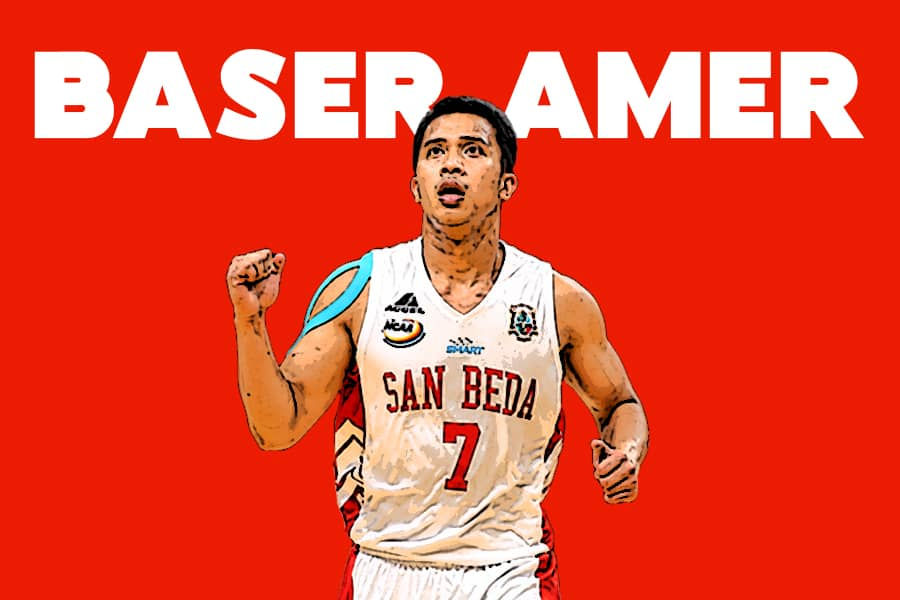
This is why, despite the unfortunate news of Nygel Gonzales tearing his ACL, the Red Lions can at least look to Puno to help fill the void left by Yukien Andrada and Bryan Sajonia. A return to San Beda would not only improve his draft stock but also give him another season to prepare for the physicality and demands of the PBA.
But going back to Abarrientos, I think his rapid rise is a combination of skill, hard work, and good fortune.
In some ways, the same thing happened with Bryan Sajonia. Selected in the fourth round, where even making the roster is far from guaranteed, he used his final NCAA season to show everyone that he was a lights-out scorer who wasn't afraid of taking over in the biggest moments. Not only did he earn a contract after helping San Beda win the championship and capturing Finals MVP honors, but he also made an immediate impact in the PBA. In his first conference, he averaged just under 10 points per game along with 2 rebounds and 2 assists, highlighted by two 20-point outings, including a career-high 29-point performance.
Every successful player needs all three.
Yes, Abarrientos benefited from joining Ginebra during a transitional period. He also carries the distinction of being the nephew of Johnny Abarrientos. However, opportunities only matter if a player capitalizes on them. RJ earned Tim Cone's trust and has developed into one of the team's primary offensive weapons.
If Scottie Thompson is the combo guard who naturally looks to involve his teammates, RJ provides another dimension. He can facilitate, but he's also constantly hunting scoring opportunities and is capable of producing 15 to 20 points on any given night.
From the days of Robert Jaworski and Francis Arnaiz, to the 1990s tandem of Bal David and Vince Hizon, to the iconic pairing of Mark Caguioa and Jayjay Helterbrand in the 2000s, and later the combination of LA Tenorio and Scottie Thompson, Ginebra's identity has always been anchored by a strong backcourt.
And while I doubt Scottie will simply fade into the background and surrender top billing, Ginebra appears to have found another young floor general capable of leading the franchise into the future.


Comments